Navicular Disease: What Is It and How Can You Support Your Horse?

Navicular disease is a condition that worries many horse owners. It often causes lameness and reduced performance, sometimes temporarily, sometimes long-term. What exactly is navicular disease, and how can you reduce the risk as much as possible?

Hooves

Clove

Silicon

Diseases
19 December '25 2 min reading time

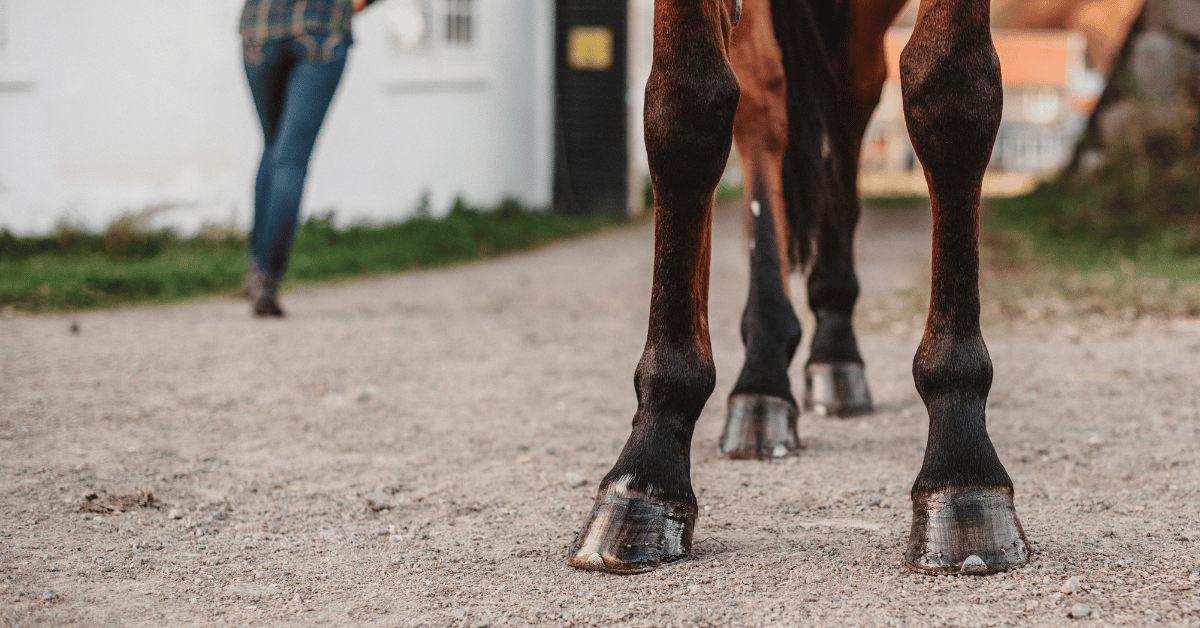
Every horse has a navicular mechanism in each hoof. This is not a single bone, but a complex system located in and just above the hoof. It functions like a pulley, distributing the forces placed on the tendons as the deep digital flexor tendon glides over a structure—similar to a pulley system on a boat or crane.

What is navicular disease?

The navicular apparatus consists of the coffin bone, pastern bone, deep digital flexor tendon, and the back of the navicular bone. A bursa and several supporting ligaments are also part of this system. Navicular disease refers to inflammation in one or more of these structures and is therefore a collective term.

Common causes include overloading, incorrect hoof conformation, and training on unsuitable or uneven surfaces. A misstep or twisting of the hoof or lower limb can also trigger the condition.

Symptoms of navicular disease

Horses with navicular issues are often lame in both front legs, though one-sided lameness can occur. Hind limb involvement is less common. Lameness may fluctuate from day to day. Tight turns and hard surfaces are often difficult. Diagnosis usually requires X-rays or ultrasound, and veterinarians may use nerve blocks to pinpoint the exact location of pain.

Treating navicular disease

Early treatment is essential to prevent progression. A veterinarian may prescribe pain relief and anti-inflammatory medication, administered orally or via injection. Proper hoof care is equally important—working with a skilled farrier or trimmer to achieve optimal hoof balance. In some cases, corrective shoeing may be recommended.

Preventing navicular disease

Prevention is key, though some horses may have a genetic predisposition. Regular, professional hoof care is fundamental. Avoid excessive training on hard or uneven ground, especially if the horse is not conditioned for it. Vary training routines, manage workload carefully, and include sufficient recovery days.

Support through supplements

Certain supplements can help maintain a healthy navicular mechanism. Adequate mineral intake is essential for the development of strong hooves, tendons, and ligaments. Silicon, particularly in liquid form, plays an important role in supporting hooves, tendons, ligaments, cartilage, and bones. Hoof health can also be supported externally with a frog gel, while clove extract may help support the horse’s overall resistance.

Also interesting

Hooves

Silicon

Hoof problems are common in horses. For example, thrush can be a persistent issue in wet weather or when horses spend many hours in the stable. Many people treat hoof problems from the outside with sprays, pastes, or oils. However, it is often also wise to support your horse from the inside. This is especially true for thrush and brittle hooves, as well as for laminitis.

Silicon as Internal Support for Thrush and Laminitis

Hoof problems are common in horses. For example, thrush can be a persistent issue in wet weather or when horses spend many hours in the stable. Many people treat hoof problems from the outside with sprays, pastes, or oils. However, it is often also wise to support your horse from the inside. This is especially true for thrush and brittle hooves, as well as for laminitis.. Laminitis is a metabolic disease that can have a severe impact on the quality of the hooves. The laminae in the hoof wall can detach, which is very painful for the horse. In the early stages of laminitis, the horse may be slightly sensitive or stumble, and if it progresses, you often see the typical stance with extended front legs to relieve the hooves. Hoof Health from Within For healthy hooves, building materials are necessary. Your horse obtains the building materials for all hoof tissue from...

Hooves

Diseases

Welfare

A horse prone to laminitis can experience hoof problems even in the winter months. There are multiple causes, but as an owner, you can take many steps to support your horse during the cold season.

Sensitive to Laminitis? Support Your Horse in Winter!

A horse prone to laminitis can experience hoof problems even in the winter months. There are multiple causes, but as an owner, you can take many steps to support your horse during the cold season.. Laminitis is a painful condition, often triggered when a horse consumes sugar-rich grass. However, horses can also be affected in winter – either by “regular” laminitis or winter laminitis. What is winter laminitis? Winter laminitis occurs when cold weather causes blood vessels in the hooves to constrict. Less blood flows to the legs and hooves, and the adrenal glands produce more cortisol, which also constricts blood vessels. In healthy horses, this is usually fine, but older horses (possibly w...

Cannabinoids

Clove

The clove plant has versatile effects for both humans and animals. Naturally, it has anti-inflammatory and analgesic properties. Additionally, it also optimizes the ECS system. This system is the body's signaling mechanism. We are not talking about the clove as you know it from the supermarket, but rather the plant and the flowers. Curious about its effects? We will tell you all about it in this blog!

Are you familiar with the medicinal properties of the clove plant for horses?

The clove plant has versatile effects for both humans and animals. Naturally, it has anti-inflammatory and analgesic properties. Additionally, it also optimizes the ECS system. This system is the body's signaling mechanism. We are not talking about the clove as you know it from the supermarket, but rather the plant and the flowers. Curious about its effects? We will tell you all about it in this blog!. Active substances in clove Clove is a dried, unopened flower bud of the clove tree (Syzygium aromaticum) and gets its name from its appearance, resembling a nail. The clove tree grows in a tropical climate and is an evergreen tree that only starts producing cloves after the 6th year. Clove is strong in smell and taste, hence it is widely used in dishes, as an insect repellent, or in fragrances. However, it's not the clove as you know it, but rather the plant and flower that have medicinal proper...

Questions? AskHELTIE!

Are you looking for advice about your dog or horse? Or do you want to know more about conditions or ingredients? Feel free to contact AskHELTIE, and we will be happy to assist you! .