Can Winter Laminitis Be Prevented in Horses?

When it gets cold in winter, some horses become sensitive or careful when walking, even on good ground. Sometimes these horses even stretch their front legs forward to relieve pressure on their hooves. This may look like laminitis, but it is not. The causes and solutions are different.

Insulin resistance

Diseases
4 December '25 2 min reading time

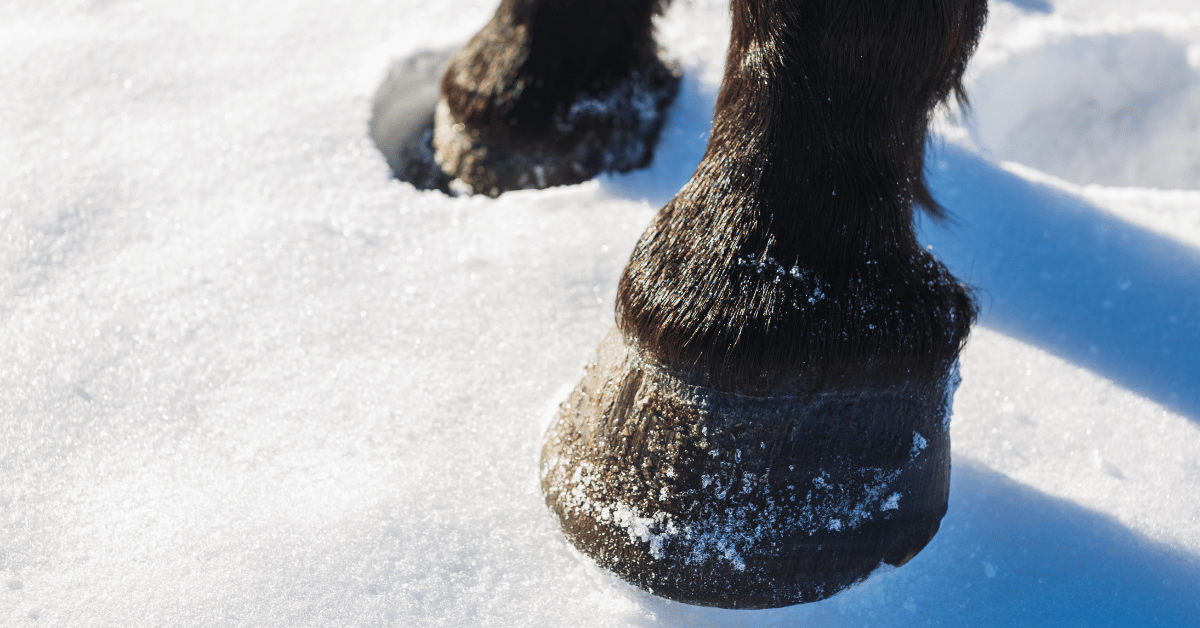
Winter laminitis – nowadays also called winter foot pain – is different from regular laminitis. Some symptoms are similar, such as difficulty walking or changing posture to relieve the hooves. Winter laminitis can occur in cold weather (usually during frost). Horses with winter laminitis do not have warm hooves. This is a major difference from regular laminitis, where the hooves feel warm and a throbbing pulse can be felt in the hoof. In winter laminitis, there is no inflammation, so the hooves do not become extra warm.

Not all hoof pain is winter laminitis

Winter laminitis occurs in very cold weather, but a horse that walks carefully in winter does not always have it. Horses recently shod or with thin soles may develop problems on hard, frozen ground. They can develop hoof bruises or sole bruises. Horses with insulin resistance or a history of laminitis may also suffer in winter, especially on sunny winter mornings when grass contains high fructans. In these cases, remove the horse from the pasture immediately if it walks carefully and its hooves are warm.

What is winter laminitis?

Winter laminitis is caused by narrowing of the blood vessels in cold conditions. To keep its core warm, less blood flows to the legs and hooves. In cold weather, the adrenal glands produce more cortisol, a hormone that constricts blood vessels. The thyroid also becomes more active, affecting blood flow to the hooves. In healthy horses, this is not a problem, as enough blood remains in the hooves. Only hoof growth slows slightly. Older horses, or horses with insulin resistance or PPID, are more vulnerable. Horses with previous laminitis damage are also more sensitive to winter hoof pain.

Managing insulin

Since insulin fluctuations also affect blood vessel constriction and dilation, proper management is important for insulin-resistant or PPID horses. This includes low-sugar hay, avoiding pasture with high-fructan grass, no sugar-rich concentrate feed, possible PPID medication, and sufficient free movement.

Preventing winter laminitis: Keep warm, amino acids, and herbs

Sensitive horses should be kept warm with a good blanket, and optionally leg coverings. Hoof boots may help. Keep the horse moving and provide unlimited roughage. Certain supplements and herbs can help reduce blood vessel constriction. Ginger is well known for this. The amino acid L-arginine also contributes, as it supports nitric oxide production, which helps dilate blood vessels.

Also interesting

Weight

Insulin resistance

Stress

Triphala

Triphala is a "herbal mixture" of 3 dried fruits from the Himalayan region. It has been used in India for centuries due to its great healing properties. In this blog, we will explain the conditions in horses where triphala can be used.

Which conditions can triphala be used for in horses?

Triphala is a "herbal mixture" of 3 dried fruits from the Himalayan region. It has been used in India for centuries due to its great healing properties. In this blog, we will explain the conditions in horses where triphala can be used.. Insulin resistance Triphala has a beneficial effect on blood sugar levels. It helps lower and balance blood sugar levels. Triphala is therefore very suitable for horses with insulin resistance. In addition, triphala is anti-inflammatory and horses with insulin resistance usually have an increased inflammatory value in their body, leading to itching. Triphala also supports in this area, reducing itching. Gastric ulcers Mucous membranes are supported by triphala. It helps restore mucous membranes,...

Others

Every winter there is a discussion among horse owners. Some horse owners blanket their horse, while others believe that the horse can do without a blanket. But is it so black and white? Do horses without a blanket really not get cold? And when does a horse actually get cold? Read more in this blog.

When does a horse really get cold?

Every winter there is a discussion among horse owners. Some horse owners blanket their horse, while others believe that the horse can do without a blanket. But is it so black and white? Do horses without a blanket really not get cold? And when does a horse actually get cold? Read more in this blog.. Horse comfort temperature Horses have a comfort temperature ranging between -5 and 10 degrees. This is the temperature at which horses feel most comfortable. And that is much lower than for humans, as the temperature for humans is around 20 degrees. Horses can usually handle the cold better than the heat. But it is important to remember to see the horse as an individual. Just like with humans, one person may walk around in a t-shirt at 15 degrees while another may need a thick jacket. The comfor...

Insulin resistance

If your horse has insulin resistance (IR), appropriate nutrition is very important. For instance, your horse should not eat too many fast sugars and starches. A deficiency in minerals such as magnesium can also worsen IR. Finally, certain herbs can help to better regulate blood sugar levels and support the immune system.

Nutrition, herbs and supplements for horses with Insulin Resistance

If your horse has insulin resistance (IR), appropriate nutrition is very important. For instance, your horse should not eat too many fast sugars and starches. A deficiency in minerals such as magnesium can also worsen IR. Finally, certain herbs can help to better regulate blood sugar levels and support the immune system.. A diet low in sugars and starch, combined with sufficient exercise and the right supplements, can help improve insulin sensitivity. It’s important to tailor the diet to the individual needs of the horse. Often, you can see your horse becoming fitter, leaner, and more energetic when you’re on the right track, but it can be helpful to have a vet check blood glucose levels from time to time. Nutrition is Key Nutrition plays a crucial role in both the prevention and management of IR in horses. First...

Questions? AskHELTIE!

Are you looking for advice about your dog or horse? Or do you want to know more about conditions or ingredients? Feel free to contact AskHELTIE, and we will be happy to assist you! .