How Often Do Dogs Shed and When?

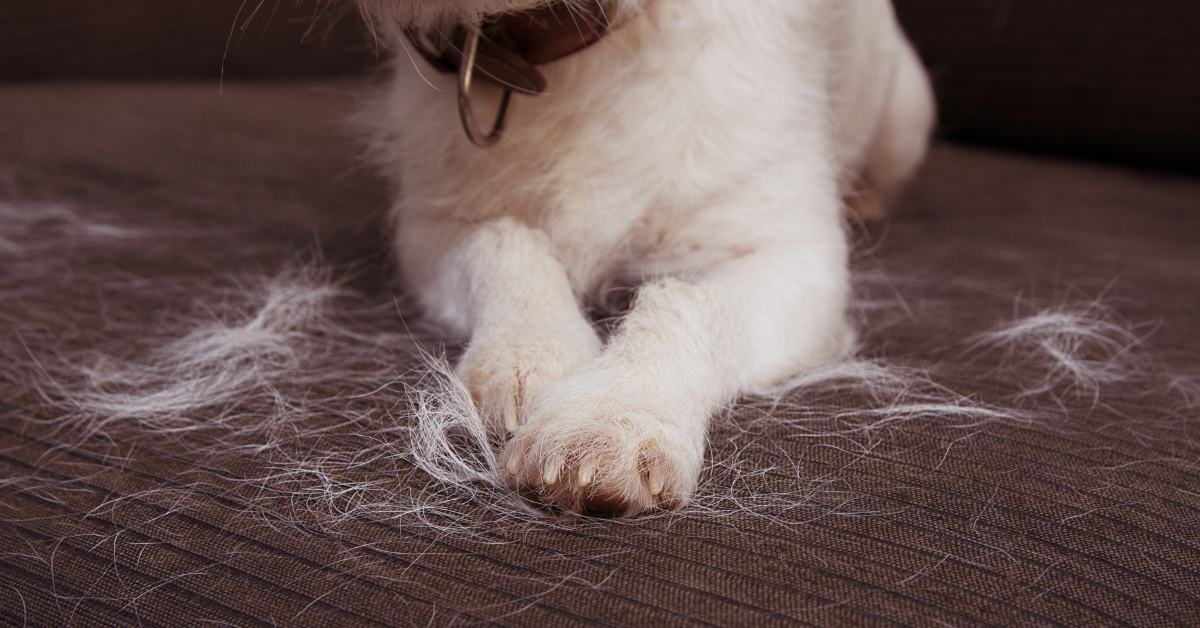
Hair on your couch, in your car, and on the dog blanket: it’s shedding season again. But how often does a dog actually shed? And when is excessive hair loss too much? You can read more about it in this article.

Skin
3 March '26 2 min reading time

Dog groomers distinguish no fewer than thirteen coat types. Proper care and shedding patterns depend on your dog’s exact coat type. However, there are some general guidelines.

Shedding Twice a Year

Most dogs shed twice a year, in spring and autumn. The amount of hair released varies depending on the coat type. Dogs with an undercoat lose more hair than dogs without one. The thin, fine hair of the undercoat often comes out in what seems like a “coat explosion”: this is referred to as “blowing the coat.” As an owner, you’ll need to brush and comb thoroughly during this period to remove loose hair. If your dog has an undercoat, entire clumps of fur can come out. The shedding period lasts six to ten weeks.

Mosaic Shedding

Not all dogs shed twice a year. Some breeds have what is known as “mosaic shedding.” These dogs lose small tufts of hair from different parts of their body throughout the year. For owners, this is not always convenient, as you’ll keep vacuuming. However, it is a natural process, especially in long-haired dogs such as the Briard, the Maltese, and certain types of Spaniels.

Dogs That Don’t Shed?

Every dog sheds, but there are breeds where you hardly notice it. These breeds are often more suitable for people with allergies. Interestingly, some of these breeds still require frequent brushing or regular visits to the groomer to prevent coat problems. Think, for example, of the Miniature Schnauzer or the Poodle.

Natural Process or Problem?

In winter, a dog’s coat is usually thicker than in summer. Shedding is a natural process. The dog gets rid of its old coat and new hair grows in. However, sometimes a dog sheds excessively. If a dog continues shedding heavily when it’s not typical for the breed, something may be wrong. And if a dog develops bald patches, that is definitely not a good sign. Bald spots do not occur during a normal shedding period. A fungal infection, parasites, a food allergy, or stress can cause this kind of extreme hair loss. Are you unsure whether the hair loss is still part of a natural shedding cycle? Consult your veterinarian.
Also interesting:

Skin

Many dogs have an undercoat, but certainly not all of them. This varies by breed. An undercoat has specific characteristics and also requires extra care. But why do dogs actually have an undercoat?

What Is the Function of an Undercoat in Dogs?

Many dogs have an undercoat, but certainly not all of them. This varies by breed. An undercoat has specific characteristics and also requires extra care. But why do dogs actually have an undercoat?. Does your dog have an undercoat? You can find out by taking a close look at the coat. If your dog has an undercoat, you can clearly distinguish two different types of hair. The topcoat hairs are somewhat longer and coarser, while the undercoat hairs are softer and shorter. The undercoat is dense and thick and is more visible in winter. In some dogs, the undercoat is easier to see in certain areas of the body, for example around the neck. Why an Undercoat? The undercoat helps your dog regulate it...

Skin

Many dogs suffer from itching, eczema, or other skin problems. This can have various causes. As an owner, it's important to know that microorganisms play a crucial role in skin health. Just like in the gut, it's important for the skin to have an abundance of 'good' bacteria and fungi.

Dog with skin problems? Also think about microorganisms!

Many dogs suffer from itching, eczema, or other skin problems. This can have various causes. As an owner, it's important to know that microorganisms play a crucial role in skin health. Just like in the gut, it's important for the skin to have an abundance of 'good' bacteria and fungi.. Our dogs and ourselves are always surrounded by a lot of tiny creatures. This may sound a bit strange or gross, but all mammals have numerous partnerships with bacteria, yeasts, and fungi. For example, in the gut, where various microorganisms help in digesting our food. Many people understand the importance of keeping this ecosystem of mini-creatures (also known as the microbiome) healthy. Skin Microbiome Not only the gut has a microbiome, this also applies to the skin! The skin is the largest o...

Skin

Skin problems are common in dogs and can have a variety of causes. They range from allergies to parasites and from infections to hormonal problems. To help your dog properly, it is important to know what is going on first.

Common skin problems in dogs

Skin problems are common in dogs and can have a variety of causes. They range from allergies to parasites and from infections to hormonal problems. To help your dog properly, it is important to know what is going on first.. The skin is the largest organ in a dog’s body. It forms your dog’s protective barrier against the outside world. When there are skin problems, you often see symptoms such as itching, redness, flaking, or crusts. If the problem is severe, skin infections can also occur. Ear infections and sore paws may also be signs of skin issues. Even an unpleasant smell can indicate a skin condition. Skin problems are not only uncomfortable for your dog—some conditions are also contagious to humans. That’s why...

Questions? AskHELTIE!

Are you looking for advice about your dog or horse? Or do you want to know more about conditions or ingredients? Feel free to contact AskHELTIE, and we will be happy to assist you! .