Wet feathers: how wet do they really get?

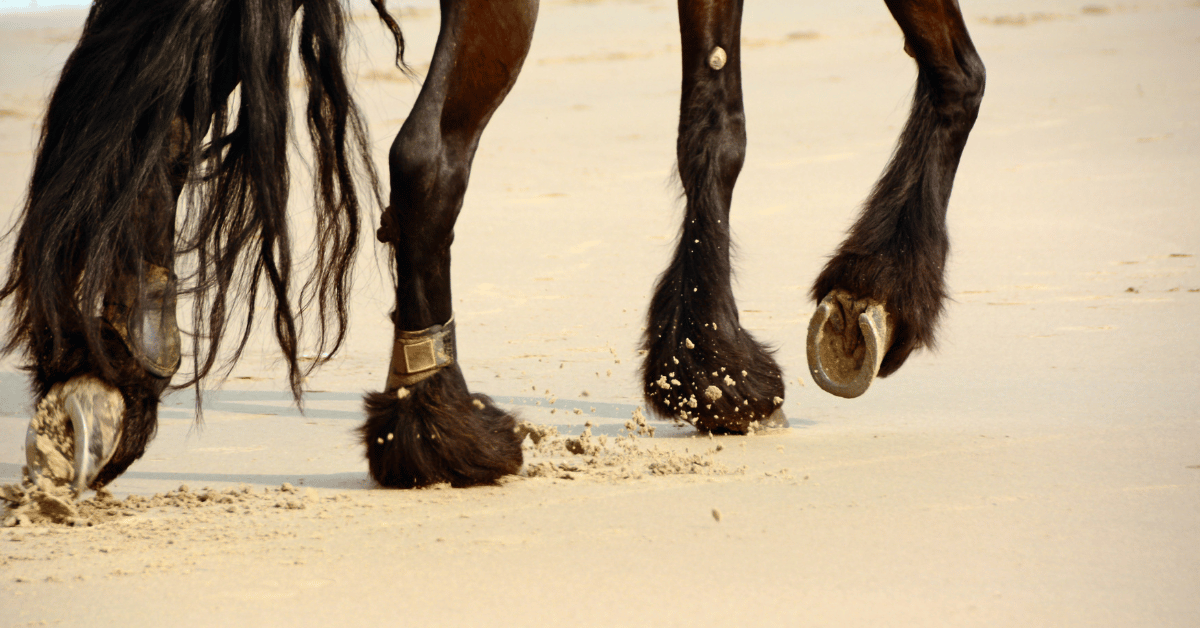
Among horse owners, there is always debate about whether or not you should clip a horse’s leg feathers. Especially in winter, many choose to clip them to keep the legs dry or to make treatment easier. Some also believe it helps prevent mud fever during the wet months. But what is the actual purpose of feathers, and how bad is it if they get wet and muddy?

Welfare

9 December '25 1 min reading time

Feathers protect the skin from external influences

Breeds like Tinkers, draft horses and Friesians are known for their long leg hair. This wasn’t random; it was bred into them because they originally lived in wetter, rougher environments where the feathers served an important purpose. Feathers have several functions:

  • Weather protection: The long hair protects skin and tendons from cold, rain and mud. It keeps moisture out longer so the skin stays warm and dry.
  • Protection from insects and irritation: Flies, midges and pests struggle to get through the dense hair. It forms a natural barrier.
  • Natural leg protection: The hair works like soft leg guards, protecting against small branches, stones and rough terrain.
  • Improved water drainage: The structure of the feathers helps rainwater run down along the hair instead of gathering around the pastern.

Wet feathers are not a problem!

To us, wet or muddy feathers may look messy, and we often assume the horse is uncomfortable. But have you ever looked inside the wet feathers? If your horse walked through water, the outside will be wet — but the skin underneath is often completely dry. The feathers keep the moisture out. So wet or muddy feathers are absolutely not harmful. They are a natural protective layer.

But always check the legs!

Although feathered legs take longer to get wet, prolonged rain, mud or other conditions can still make the skin damp. Because it’s warm between the hairs, irritation can develop. Check regularly: Skin dry and clean? → no action needed. Spots, irritation or dampness? → step in early; consider clipping part of the feathers to allow proper treatment.

Conclusion: wet feathers are part of the deal

If your horse has feathers, wet feathers are simply part of winter. Of course you can provide dry areas, but always monitor the legs carefully and intervene when needed.

Also interesting

Skin

Mites

Autumn, winter, mud and rain... The perfect combination for dirty, wet horse legs. Often, we have the tendency to shave off all the hair of horses. Trim the legs neatly, tidy up the beard, make the ears look nice, and so on. A sleek horse, looking neat without much hair, standing like a real model. But is it really wise to shave everything off?

Did you know that the feathers of the horse keep the legs dry?

Autumn, winter, mud and rain... The perfect combination for dirty, wet horse legs. Often, we have the tendency to shave off all the hair of horses. Trim the legs neatly, tidy up the beard, make the ears look nice, and so on. A sleek horse, looking neat without much hair, standing like a real model. But is it really wise to shave everything off?. Hair has a purpose! By now, it's (hopefully) common knowledge not to touch or shave off the whiskers of a horse. These whiskers are extremely important and serve a crucial function, preventing horses from bumping into things. But the hair in and around the ears also has a purpose: it prevents dirt and water from getting into the ears and protects them from external influences. Never cut/shave the ear shells, leave the hair on the inside intact! The same goes for the hair on the legs of horses, t...

Skin

Resistance

In autumn and winter, many horses suffer from flakes, small wounds, and sometimes even infections on their lower legs. These complaints are often grouped under the name “mud fever.” Many people think mud and wet conditions in the paddock or field directly cause mud fever. However, that is not entirely correct. So, what’s the real cause, and how should mud fever be treated?

Mud: Does my horse get mud fever from it?

In autumn and winter, many horses suffer from flakes, small wounds, and sometimes even infections on their lower legs. These complaints are often grouped under the name “mud fever.” Many people think mud and wet conditions in the paddock or field directly cause mud fever. However, that is not entirely correct. So, what’s the real cause, and how should mud fever be treated?. Mud fever is a term horse owners use for skin problems on the lower legs and in the pastern folds. These include wounds, scabs, flakes, and infections. If the problems occur higher up the leg, the condition is usually called “rasp.” Bacteria, fungi, parasites Mud fever can be caused by bacterial infections, fungi, or parasites such as mites. We usually distinguish between “dry mud fever” (scales and cracks) and “wet mud fever” (with fluid and blisters). When a horse stands on wet ground, in mud,...

Skin

Mites

Your horse is stamping its feet, has crusts in the fetlock pits, or keeps rubbing its legs... What could be the issue? Some say: mud fever! Others call out: mites! But what's actually the difference? And what should you do if your horse has mud fever and/or mites?

Does my horse have mud fever or mites?

Your horse is stamping its feet, has crusts in the fetlock pits, or keeps rubbing its legs... What could be the issue? Some say: mud fever! Others call out: mites! But what's actually the difference? And what should you do if your horse has mud fever and/or mites?. Mud fever is a collective term for various skin conditions above the hoof, in the fetlock pit, and on the lower legs. You may see crusts or small wounds and your horse often has itching. Although itching is not always present. Mites are parasites that reside in the socks and complete their entire life cycle, from egg to adult mite, there. Mud Fever and CPL The term mud fever is used for different conditions and does not provide much information about the cause and severity of the ailment. Mud fe...

Questions? AskHELTIE!

Are you looking for advice about your dog or horse? Or do you want to know more about conditions or ingredients? Feel free to contact AskHELTIE, and we will be happy to assist you! .