The power of mare’s milk for a foal
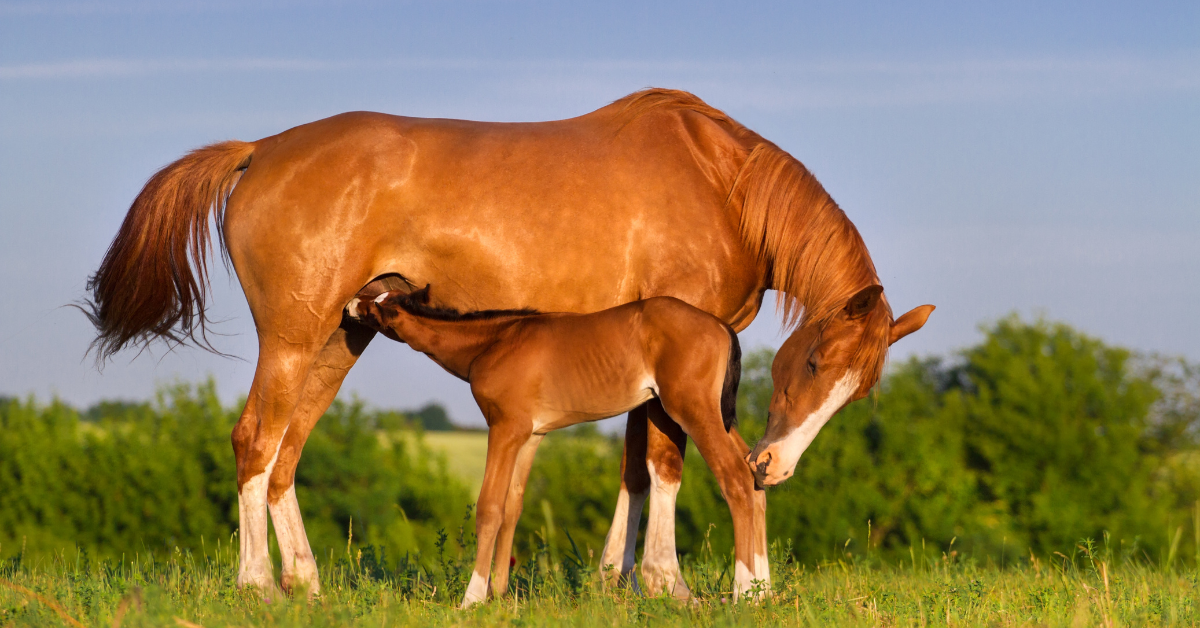
Mare’s milk is the foundation for every healthy and strong-growing foal. What exactly does it contain? How much milk does your mare actually produce? And what else should you know about mare’s milk when breeding a foal?
Feeding
Breeding
16 April '26 • 4 min reading time
To begin with, we need to distinguish between the very first milk, colostrum, which is produced during the first 24 hours, and the “regular” milk that follows. Colostrum is thicker and more yellow and is packed with antibodies and essential nutrients for giving the foal a good start. It is crucial that a foal receives colostrum, as this forms the basis for a strong immune system. Foals are born without antibodies, as they receive virtually none through the placenta in the uterus. This is different from other mammals, such as humans. Foals must therefore acquire their antibodies after birth and are very vulnerable during their first hours.
“Doping for foals”
The absorption of antibodies through the intestines is most effective during the first eight hours after birth. Ideally, the foal consumes about two liters of colostrum during this time. If a foal drinks too little colostrum or if the quality is insufficient, this can lead to infections and other problems later on. If nursing from the mare does not go well, colostrum substitutes are available. However, colostrum from the mare herself is always preferred. Especially in the first hours after birth, the intestinal wall absorbs antibodies efficiently. After 24 hours, the small intestine closes to antibody absorption and this process stops. Speed is therefore essential. Colostrum is sometimes jokingly referred to as “doping for foals.” If you have ever seen a weak and wrinkled newborn foal transform into a fluffy, energetic little creature after a few good doses of colostrum, you will understand the expression.
Testing antibodies
Your veterinarian can test after 24 hours whether the foal has received enough colostrum using an antibody test. If levels are insufficient, a plasma transfusion can help give the foal’s immune system a strong start.
Mare’s milk for growth
After 24 hours, the thick yellow colostrum gradually turns into “regular” mare’s milk. But this is still remarkable. It is rich in nutrients such as sugars, proteins, vitamins, and minerals. Shortly after birth, the mare produces about seven to eight liters of milk per day. Milk production peaks at around 20 to 30 liters per day when the foal is two to three months old. During the first five weeks after birth, a foal drinks about 23% of its body weight in milk per day, decreasing to about 20% afterward. With such a high milk production, the mare’s energy and protein requirements increase significantly. It is therefore important to provide additional feed so she has enough nutrients to pass on to the foal. One of the remarkable aspects of mare’s milk is that it is truly “tailor-made nutrition.” For example, in winter the milk contains more fat than in summer, as the foal needs greater fat reserves in colder conditions.
From milk to hay, grass, and concentrates
At the beginning of a foal’s life, the mare’s milk is its only source of nutrition. During the first months, it remains the foundation of the diet. A foal up to three months old primarily drinks milk, but over the weeks and months it will increasingly start to taste grass or hay and try its mother’s feed. You can encourage this curiosity by offering small amounts of foal feed or a handful of hay from around the third week onward. Starting early helps stimulate the digestion of forage and concentrates. This also ensures the foal begins to consume dietary fiber early on, supporting the development of the gut microbiome. It is common to see young foals eating fresh manure from their mother. While this may look unpleasant, it allows them to ingest essential microorganisms (bacteria and fungi) needed for digesting forage. Very beneficial indeed! When your foal is about one month old, you can also begin offering small amounts of its own concentrate feed, known as foal pellets. These are specifically formulated to meet the foal’s nutritional needs. Not only do they contain essential nutrients, but they also help the foal learn to eat concentrates, which is useful during the weaning process.
Rhesus foals – rare but serious
In rare cases, a rhesus foal may be born. While uncommon, it is important to be aware of it. In such cases, the mare’s body produces antibodies against the foal’s red blood cells. These antibodies are present in the colostrum, meaning the foal can damage its own organs when drinking it. After a few days, the foal may become ill, weak, and develop yellowing of the eyes (jaundice). This is a serious condition that can lead to the foal’s death. It never occurs with a mare’s first foal but develops after two or more pregnancies. If your foal appears weaker after a few days, always contact your veterinarian. A rhesus foal often requires a plasma transfusion to survive. After that, it can safely drink the mare’s milk again, as once the intestinal wall has closed to antibody absorption (after 24 hours), there is no longer any risk.